Terry Abraham.png

Terry Abraham

Information from Dr. Terry Abraham's obituary, found here.

Terry Abraham “was born Oct. 6, 1944, in Portland, Ore., the second son of Frederick E. and Marion A. Abraham. A book and history lover from a young age, he earned his Bachelor of Fine Arts degree from the University of Washington in 1965, a Master of Fine Arts degree from Washington State University in 1968, and a Master of Library Science from the University of Oregon in 1970. That same year, he also earned a certificate in archival librarianship from UO.

"Terry's 37-year career included stints at Washington State University, the California Historical Society and finally the University of Idaho, where in 2005 he retired as a professor and head of special collections and archives after 21 years of service. He actively supported the national community of archivists and librarians, serving as a program officer for the National Endowment for the Humanities, a projects editor for the Society of American Archivists and a member of the Idaho Humanities Council Speakers Bureau. He was a founding member and former officer of Northwest Archivists.

"On April 24, 1992, Terry married Priscilla Wegars, historical archaeologist and founder of the UI's Asian American Comparative Collection. They were life partners in every sense, sharing similar educational backgrounds, personal and intellectual interests, a good sense of humor and a grand sense of adventure. They truly were best friends.

"Terry and Priscilla shared an abiding and keen interest in the history of the Pacific Northwest, particularly the roles and lives of the Chinese in the region. They collaborated on numerous publications on the topic, including "Chinese Cemeteries and Burial Practices in the Pacific Northwest," a chapter in Alta Mira Press's "Chinese American Death Rituals: Respecting the Ancestors." Terry also wrote "Mountains So Sublime: Nineteenth Century British Travellers and the Lure of the Rocky Mountain West," a book published in 2005 by University of Calgary Press. In 2007, he won a coveted Esto Perpetua ("Let It Be Perpetual") award from the Idaho State Historical Society.”

Thelma.jpg

JONA articles concerning Thelma Adamson:

  1. Whatever Happened to Thelma Adamson? A Footnote in the History of Northwest Anthropological Research [Spring 1999, 33(1)]
    • William R. Seaburg

Thelma Adamson

In the summer of 1926, Thelma Adamson drove across the country with Melville Jacobs and Otto Klineberg to undertake field research with Native Americans in Washington State. During the trip she studied Chehalis and Cowlitz Salish folklore and ethnology. She often wrote to her mentor Franz Boas about her time in the field. Two years after this cross-country trip, she became an Associate in Anthropology at the University of Washington. She taught a course, Indians of the Northwest Coast, and continued her research. Eventually her work was published, entitled Folk-Tales of the Coast Salish in 1934 as Memoirs of the American Folk-lore Society, Volume 27.

Folk-Tales of the Coast Salish is a major contribution to our knowledge of western Washington Salish oral traditions. It contains 190 texts collected from 19 consultants; with few exceptions, all were collected in English or in English translation. The bulk of the stories (155) represent Upper Chehalis and Cowlitz Salish narrative traditions, primarily myths and tales, constituting the largest published collection of oral literature for either of these groups. One valuable part of this collection is the inclusion of as many as four variants of the same tale-type. Adamson also included a useful 43-page section of abstracts with comparative notes from eight regional text collections. Although the consultants' language has probably been altered to conform to standard English, the stories do not appear to be bowdlerized. Among other research purposes, this collection provides a rich data source for those interested in the content-and-style analysis of Native texts told in English.

Adelung.jpg

Read the translated Northwest Coast material from Mithridates oder allgemeine Sprachenkunde:


Johann Christoph Adelung

From Richard L. Bland in JONA 48(1)

Johann Christoph Adelung (1732–1806) was born at Spantekow in Western Pomerania (present-day Germany). He was educated in schools at Anklam and Berge Monastery, Magdeburg, and the University of Halle. Adelung took on many careers, from being a professor at the gymnasium in Erfurt, to devoting himself to philosophical studies in Leipzig, to becoming head librarian to the Elector of Saxony in Dresden.

Among many other language-oriented works, Adelung produced one of the earliest studies of Northwest Coast languages. The study was produced in Germany and is found within Adelung's major work Mithridates oder allgemeine Sprachenkunde (Mithridates or General Linguistics), published between 1806 and 1817. This work includes compiled word lists to compare languages found in different areas and evaluates the claim that the Northwest languages originated in Mexico. Adelung also sought to draw connections between northern Eskimo populations and coastal peoples farther south. 

Andrade.png

Manuel José Andrade

From Jay Powell to Jay Miller (email 9-25-2017):

Mel Jacobs told me that when Andrade arrived in Seattle, sent in 1928, by Boas to work on Quileute (when it became apparent that Frachtenberg wasn't going to produce anything publishable on the Quileute language after his work in 1915–16. Mel picked him up at the train station , put him up for the night and then drove him out to LaPush, stopping at Port Townsend so that Andrade could meet the last of the Chimacum speakers. Mel sat in the car while Andrade went in and spoke with "the informant," reading the New York Times while Andrade was probably the last person who ever got his ear on Chimacum. 

Mel said that he thought he remembered that Andrade was a Spanish teacher who went to Boas and expressed an interest in anthropological linguistics. Boas gave him the texts that Ftachtenberg had taken down and said, "See what you can do with these...try to come up with a grammatical sketch." Andrade took the texts with English translation (Frachtenberg had a damned good ear for NW phonology). After working on the texts, Andrade went back and showed Boas his initial grammatical analysis, and Boas invited him on the spot to work with him (Boas) in a Columbia seminar group and then go out to spend six weeks in La Push.

Andrade worked with Hal George, who had also worked with Frachtenberg. Hal said about Andrade, "Hachitalhitali ti'yalh" (generous man) when Hal and I were working together in 1978. Andrade had Frachtenbergs and his own set of texts (with Quileute and grammatically sensitive translation on facing pages). It was ready for publication in CUCA in 1931 and his grammatical sketch of Ql came out in Vol 3 of the Handbook of Amer. Indian Langs. 1933. By 1930, Andrade was already working on Yucatec. 

He was at and associated with the University of Chicago, doing work in the Yucatan in 1930, 1931 and 1933. He almost had his grammatical sketch done before his "untimely death" in 1941. 

FranzBoas.jpg

JONA articles concerning Boas:


Franz Boas

Franz Boas (1858–1942) trained as a physicist in Germany but changed to native peoples,  especially the Northwest Coast, after a time in the Canadian Arctic. After working at the Field Museum in Chicago and the American Museum of Natural History in New York City, directing the Jesup North Pacific Expedition, he established academic anthropology at Columbia University, where he recruited Herman Karl Haeberlin from Germany. Boas was ousted from both museums under painful circumstances beyond his own control, going on to train generations of professional anthropologists to carry his mission forward. 

DavidChance-220x300.jpg

David H. Chance

All information from David H. Chance's obituary, found here.

David H. Chance was born in Portland, Oregon, in 1941.  When he was eight he moved, along with his family, to Assam, India.  He remained in India until he was eighteen years of age.  Growing up he roamed the Naga Hills with his father and the Himalayas, near Woodstock School in Mussoorie.  He became an experienced outdoorsman and developed a deep regard for the natural world.  He also became fluent in speaking Assamese.  His India years instilled in him a love of human culture, past and present. For more than thirty years David was an archaeologist in the Pacific Northwest, working on sites in Oregon, Washington, Idaho and Montana.  His work ranged from Native American sites to Hudson’s Bay Company posts and U.S. Army Forts.  Some sites of note include Kettle Falls fishery; St. Paul’s Mission; Fort Colvile of the Hudson’s Bay Company; Lapwai Creek and Spalding Mission; Fort Spokane; City of Rocks; Hatiupuh Village on the Snake River and Kanaka Village at Fort Vancouver.  He produced dozens of published reports, booklets and books on these subjects.  David spent his life exploring the past in order to connect it to the present and future.

Alexander Chase

Courtesy of Northwest Anthropological Research Notes

Alexander W. Chase (1843–1888) was the first person to perform archaeological research on the northern California and southern Oregon coast, and to publish his findings. Between 1863 and 1878, while employed by the U. S. Coast and Geodetic Survey, Chase visited the southern Oregon coast. The results of some of his work, performed in the early 1860s, were published in 1869 and 1873, but a major unpublished manuscript completed in 1873 and his correspondence with John W. Powell and Spencer F. Baird in the early 1880s provide insight to the depth and breadth of Chase as a scholar and as a man. Chase was "apparently a surveyor by training, and an anthropologist (among other things) by avocation."

Cole.png

David L. Cole

David L. Cole (1928–2017), former University of Oregon principal archaeologist, worked as an undergraduate with Luther S. Cressman, and was a transitional figure in Oregon archaeology. A remembrance was published in JONA in 2017, shortly following his passing.

Read the remembrance here:

Dyk.JPG

Walter Dyk

Email from Jay Miller 09-18-17

The linguist Walter Dyk (1899–1972) began his career as a graduate student under Edward Sapir studying the Wishram language. Following his M.A. thesis "Verb types in Wishram" (Chicago, 1931) and dissertation "A Grammar of Wishram" (Yale, 1933), Dyk turned to the study of Navajo language and culture, publishing his best known works, "autobiographies" of two of his consultants, Left Handed (1938) and Old Mexican (1948). The Dyk Collection consists of copies of Dyk's M.A. thesis and dissertation, some fields notes and related publications on Wishram, and commentary by Mary Haas, C. F. Voegelin, and Dell Hymes (who assembled the collection). Among the more interesting items are a particularly long and informative letter from Sapir commenting on Dyk's dissertation, and a series of letters between Pete McGuff and Sapir, written while the former was doing fieldwork on Wasco at Fort Simcoe, Washington, 1906–1908.

Photo from HistoryLink.org

Photo from HistoryLink.org

Myron Eells

Myron Eells (1843–1907), of an early missionary family, was long based on Hood Canal among the Twana people resettled on the Skokomish Reservation. His brother Edwin Eells was the federal Indian Agent during some of this time.

Cunningham.jpg

NARN/JONA materials concerning Alice Cunningham Fletcher:


Alice Cunningham Fletcher

Courtesy of Northwest Anthropological Research Notes

Alice Cunningham Fletcher was the first anthropologist to work among the Nez Perce Indians. She was sent as a Special Agent of the U. S. government to facilitate the allotment of the Nez Perce Reservation in north-central Idaho. Based on her fieldwork from 1889 to 1892, she prepared two ethnological manuscripts concerning diverse aspects of traditional Nez Perce culture, but neither study was ever published. At her request, a Nez Perce elder prepared a map of Nez Perce territory that included the locations and descriptions of 78 traditional villages as they existed in the early nineteenth century. 

In 1889, Special Indian Agent Alice Cunningham Fletcher arrived in Idaho to implement the Dawes Severalty Act of 1887 and allot the Nez Perce Reservation. During her four field seasons in Nez Perce Country, Alice Fletcher wrote numerous letters to her employer, Commissioner of Indian Affairs Thomas Jefferson Morgan in Washington, D. C., and to her mentor, Frederic W. Putnam at Harvard University. Her professional correspondence describes the progress of allotment work and the gathering of anthropological information.

Image from Wikipedia

Image from Wikipedia

George Gibbs

Courtesy of Jay Miller

George Gibbs (1815–1873) was from a prominent Northeast family and spent eleven years in the Northwest (1849–1861). With a law degree from Harvard, he worked in the customs office at Astoria, Oregon, then joined the California Gold Rush. He served on treaty commissions in Oregon, California, and Washington, as well as the Canadian boundary survey. After he returned East, he oversaw the indemnity payment to Hudson’s Bay Company for Fort Nisqually. He lived in Washington, D.C., New York City, and New Haven, marrying his cousin and intending to write up the extensive materials on native languages and ethnography he had assembled during fieldwork in the West and study in the Smithsonian archives.

For more information, see Jay Miller's George Gibbs Northwest Array (2015).

De Lancey Walker GIll.png

De Lancey Walker Gill

Courtesy of Jay Miller

De Lancey Walker Gill (1859–1940), born in Camden, South Carolina, was largely self-taught with little formal education, but in 1887 became assistant draftsman in the supervising Architect's office for the United States Government. Artist-scientist William Henry Holmes noted Gill's artistic ability and recommended his hiring to illustrate for the US Geological Survey and the Bureau of Ethnology, sketching across Indian Territory, Arizona desert, and upper Yellowstone Valley. He turned to photography, producing thousands of portraits of natives calling on the Bureau of Indian Affairs in D.C. He married three times, to Rose De Lima Draper (died 1893), painter Mary Irvin Wright (divorced 1903), and Katherine Schley, with a total of eight children. Forced to retire at 73, he taught art at the Corcoran Gallery in Washington, D.C., then retired to Virginia where he died from a fall down his stairs.

Pliny Earle Goddard.png

Pliny Earle Goddard

Courtesy of Jay Miller

Pliny Earle Goddard (1869–1928), after a Quaker education and missionary work among the Hupa of northern California, turned to anthropology and was at the AMNH until his death. While his invalid wife and children lived in Connecticut, he had a long term relationship with Gladys Reichard (1893–1955). Reichard was from a Pennsylvania Dutch family, and taught from 1923 at Barnard College, the female side of Columbia, and assumed Herman Karl Haeberlin's devotion to Boas. 

Read more in Goddard's death notice, published in the American Anthropologist in 1929.


Guie.png

NARN/JONA materials concerning Geraldine Coffin Guie:


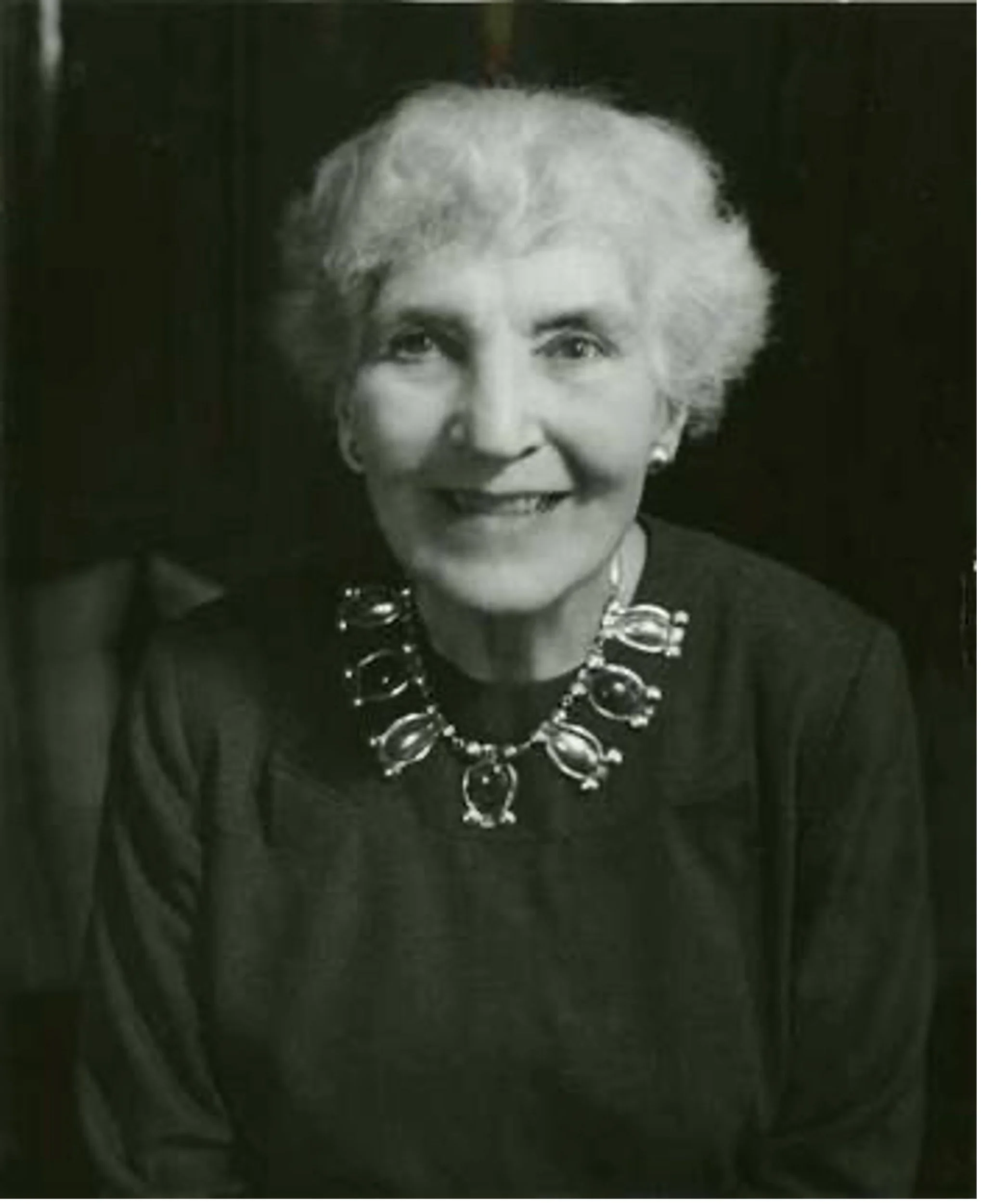
Geraldine Coffin Guie

Courtesy of Jay Miller in the Journal of Northwest Anthropology

The Coffins are a prominent family in the Yakima Valley. Geraldine, enrolled at the University of Washington, was one of its first anthropology majors, coauthoring a famous study of canoes while studying with Thomas T. Waterman (1922, 1924, 1973; Waterman and Coffin 1920; Waterman and Greiner 1921; Waterman et al. 1921). After Waterman went back to Berkeley, Geraldine Coffin studied with Leslie Spier and his then wife, Erna Gunther, who became a life-long friend.

Gerry's husband, Dean Guie, is listed as the editor of Mourning Dove's "folklores" efforts, Coyote Stories, finally published in 1933 (Mourning Dove 1933, 1976), the topic where the tape begins in the summer of 1980. All of the text is by Gerry, with questions and remarks by Jay Miller prefaced by JM.

Image from Wikipedia

Image from Wikipedia

Erna Gunther

Courtesy of Jay Miller

Erna Gunther (1896–1982) was Alsatian, a mining district fought over by France and Germany. In consequence, her family was bilingual in German and French, as well as fluent in English. She took her B.A. at Barnard in 1919 and was recruited by Boas for graduate work. She and Leslie Spier had a legal contract instead of a marriage license. Spier was hired to replace Waterman at the University of Washington (UW), but disliked the rain. He joined the faculty at the University of Oklahoma, while Gunther worked in New York City on a study of Southwestern folklore. In 1927, both were to return to the Burke Museum at UW in Seattle, but only Leslie had the academic job. When he took leave for fieldwork in the Pacific, Gunter replaced him and stayed on permanently until she was made unwelcome when the new Burke Museum was built in 1964. She received the Haeberlin notebooks just after he died to extract and publish ethnography and folklore.

Read more in Erna Gunther's death notice, published in the American Anthropologist in 1984:

Howe.jpg

Read the found volume of The Antiquarian:


George Howe

From Roderick Sprague in Northwest Anthropological Research Notes, Vol. 4(2), Fall 1970

George Louis Howe was born in Holden, Massachusetts on July 18, 1874 and came to Oregon at the age of 10 when his parents homesteaded at Granger, near Corvallis, Oregon. After graduating from Albany College in 1896, Howe attended Stanford University, majoring in mathematics, but never completing his degree. However, while at Stanford, Howe did archaeological work at the Castro Mound and had an interest in archaeology dating back to his childhood.

Howe taught in Lind County, Oregon, at Knox's Butte Public School and in Brownsville, Oregon. Howe recorded ethnographic, archaeological, and paleontological data with a camera at an early date. Roderick Sprague discovered three numbers of volume one of The Antiquarian, published in Albany, Oregon, in 1891, crediting Howe as its editor and publisher. These publications were reprinted in NARN Vol. 4(2) because of their rarity and importance to the history of anthropology in the Northwest. 

George Howe died in Lind County on April 4, 1951.


Jacobsen.jpg

NARN/JONA articles concerning Bernard Fillip Jacobsen


Bernard Fillip Jacobsen

Courtesy of Northwest Anthropological Research Notes

In the late 1800s, as the world was more and more rapidly falling under Western influence, there was a rush by European and American scholars to collect everything of Native cultures before it all vanished. One of the collectors, working more or less independently, was Bernard Fillip Jacobsen. Jacobsen, a Norwegian, arrived on the Northwest Coast of North America in 1884 where he remained for the remainder of his life. There he encouraged settlement of the region, collected Native artifacts that he sold to museums, and wrote and published articles on the region and on his exploits. His articles included travelogues, descriptions of Native dances, and Native legends.

ruthann.jpeg

Ruthann Knudson

All information from Dr. Ruthann Knudson's obituary, found here.

“Ruthann was born in Milwaukee, Wisconsin to Sidney and Clara (Tappe) Knudson on October 24, 1941. She spent much of her youth in Duluth, Minnesota and graduated as Valedictorian of her Denfeld High School class. She continued her education at Hamline University, University of Minnesota (Phi Beta Kappa), University of Idaho, and earned a Ph.D. in anthropology at Washington State University. As a young girl Ruthann read every one of Zane Grey's western novels. During summers in college she worked as a salad cook and seasonal ranger in Mesa Verde, Yellowstone National Park, and Bandelier National Monument where she became interested in native American history and culture. Her university studies and most of her subsequent work centered on Plains Indian archeology and anthropology. Her career began as an Instructor and Assistant Professor of Anthropology at the University of Northern Colorado, Wright State University, and Washington State University. Later she was an Assistant Professor at the University of Idaho where she managed the Laboratory of Anthropology. In the 80's she was VP/Senior Project Scientist at Woodward-Clyde Consultants in San Francisco. Ruthann worked as an Archeologist for the National Park Service in Washington, D.C., and then was Superintendent of Agate Fossil Beds National Monument for 10 years. She semi-retired and moved to Great Falls where she remained active in research and education through her Knudson Associates consulting business. Her recent activities included Executive Director of the Friends of the Museum of the Plains Indians, teaching on-line courses at Great Falls College/Montana State University, and serving on the Upper Missouri River Heritage Area Planning Board and the Great Falls/Cascade County Historic Preservation Commission. She was a speaker on Montana Indians through the Humanities Montana Speakers Bureau. She continued to participate in various research and education projects at the national, state and local levels. Ruthann was an expert at flint-knapping and provided many wonderfully detailed illustrations for research studies. She was recognized professionally through a number of honors and awards including the prestigious Margaret Mead Award from the American Anthropological Association.”

Krieger.jpg

NARN/JONA materials concerning Herbert Krieger:


Herbert Krieger

From the Handbook of North American Indians, No. 12: Plateau. 1998.

"In 1934, Herbert W. Krieger, curator of ethnology at the U.S. National Museum, surveyed and tested burial and housepit sites on the Columbia River. This investigation was he first of many large-scale archaeological investigations prior to reservoir development in the Plateau" (p. 18).

"First acquired by the federal government in 1943, the site history is typical of shifting culture resource management frames applied to the Plateau as whole. The earliest research was that of Herbert Krieger, Smithsonian Institution, who excavated the village site of Wahluke during 1926 and 1927. Artifacts and human remains are at the National Museum of Natural History, Smithsonian Institution. This was the first and last instance of research at Hanford, with all later work directed by pragmatic culture resource management concerns" (p. 26). 

Archie Phinney 38 1 fig 2.JPG

JONA Spring 2004, 38(1) was a volume dedicated in its entirety to memorializing Archie Phinney. Read it here:


Archie Phinney

Nez Perce linguist, anthropologist, Bureau of Indian Affairs superintendent, and American Indian activist; Archie Phinney left his home in Culdesac, Idaho to become part of a select group of Americans Indians mentored by Franz Boas. Phinney avoided government or religious schools and gained a college education that took him to graduate studies in the Soviet Union, exposing him to two of the world's leading anthropologists and their differing methodologies. Mentored by Franz Boas and Vladimir Bogoraz, fluent in Numipu and English, and a student of the Russian language, Phinney followed American Indian scholars William Jones and Ella Cara Deloria in a renaissance of American Indian languages and cultures. As a published author, doctoral scholar, and world traveler, Phinney learned the arts and crafts of anthropology and ethnography at home, in the field, and in the Soviet Union. Returning from Russia to participate in the development of Indian Reorganization governments, Phinney moved into the field of applied anthropology as a high-ranking Bureau of Indian Affairs officer. As an American Indian intellectual of the 1930s and 1940s, Phinney joined D'Arcy McNickle and others in forming the National Congress of American Indians. Phinney's Nez Perce Texts and various publications, his involvement with John Collier and the Indian Reorganization Act, and testimonies from Charles E. J. Heacock (1945), Franz Boas, and Ralph Maud (1982), speak to the breadth and depth of Phinney's legacy.

pinart.jpeg

Read Pinart's three translated articles here:


Alphonse Pinart

Courtesy of the Journal of Northwest Anthropology

In the late 1800s, European society developed a desire to document the native cultures that were rapidly disappearing. Alphonse Louis Pinart was France’s representative in this rescue effort. He hastily collected materials and published his results in brief articles. Three of his twelve articles on Alaska are translated and reproduced by Richard L. Bland in JONA 50(1). In these three articles, Pinart describes some of the customs of Alutiiq and Tlingit peoples, as well as Aleut masks and other artifacts he found in a burial cave on Unga Island in the Shumagin Islands.

sprague.jpg

Roderick Sprague

Dr. Roderick Sprague III was perhaps best known as a Northwest Historic Archaeologist, Professor Emeritus at the University of Idaho, and co-editor of the Journal of Northwest Anthropology. His extensive field work was conducted in Idaho, Washington, Oregon, Alaska, Arizona, and Prince Edward Island. In 1986, he received both the University of Idaho's Library Faculty Award for Outstanding Service and the Sigma Xi Published Research Paper Faculty Award. In 1996, he received the J.C. Harrington Medal, the highest international award in historical archaeology, and he received the Carol Ruppe Service Award in 2004, both given by The Society for Historical Archaeology. 

During his career, Sprague published more than 120 scientific papers and articles along with more than 100 unpublished reports to agencies. These articles specialized in historical archaeology, culture change theory, and artifact analysis and included areas such as glass trade beads and buttons. His significant work on historic archaeology in Washington includes the excavations at American and British Camps at the San Juan Historic Park.

Teit.jpg

JONA articles concerning James Teit:


James Teit

James Alexander Teit (1864–1922) was born in the Shetlands, moved to Spence’s Bridge among the Thompson Islands in BC, married a native woman, and after 1895 was encouraged by Franz Boas to undertake original research. He was particularly concerned to protect tribal rights.

Those interested can research Teit further by reading Recording Their Story: James Teit and the Tahltan by Judy Thompson (2007).

Read more on Teit in his death notice, published in the American Anthropologist, Vol. 24(4):490–497.

priscilla-wegars.jpg

Priscilla Wegars

Dr. Priscilla Wegars' areas of interest include historical Archaeology of Asian-Americans in the West, specifically Chinese-American and Japanese-American sites, artifacts and history; Chinese women, specifically Polly Bemis; 19th and 20th Century American material culture.
(https://www.uidaho.edu/class/soc-anthro/faculty-and-staff/priscilla-wegars)

Priscilla Wegars is a historian, historical archaeologist, artifact analyst, editor, and proofreader. She founded the University of Idaho's Asian American Comparative Collection (AACC), a unique resource of artifacts, images, and documentary materials essential for understanding Asian American archaeological sites, economic contributions, and cultural history. Priscilla edited Hidden Heritage: Historical Archaeology of the Overseas Chinese (1993) and co-edited Chinese American Death Rituals: Respecting the Ancestors (2005). She wrote Imprisoned in Paradise: Japanese Internee Road Workers at the World War II Kooskia Internment Camp (2010) and As Rugged as the Terrain: CCC “Boys,” Federal Convicts, and World War II Alien Internees Wrestle with a Mountain Wilderness (2013). She is currently expanding her book for children, Polly Bemis: A Chinese American Pioneer (2003), into a biography, for adults, of Polly Bemis's life. (http://www.idahohumanities.org/sb_speaker.php?speaker_id=58)

Joyce Anne Belle Wike Thieme Holder

Courtesy of Jay Miller

Though born in Spokane (22 April 1918 at 12:30 AM), Joyce was a child of Cusick, where her father, John Adam Wike, owned the grocery store with his brother. It was managed by her mother, Mildred, whose family came from Denmark. A booster encouraging the planting of many trees, Adam was mayor, county commissioner, member of the school board, and chairman of county fair.  Both parents had been school teachers when younger. 

Cusick, in Pend Oreille County northeastern Washington, was founded in 1902 by Joseph W. Cusick on the site of largest Pend Oreille/Kalispel community (Interior Salish: čmq̓ʷoqnú), 1,000 strong, and still the home of a Kalispell reservation. A Diamond Match mill sustained the logger economy, rebuilt after it burned in 1923, until it closed 12 May 1960.  

Graduating high school (1935), Joyce had a scholarship at Whitman College in Walla Walla, where she was unhappy because “not the type one takes to a prom.” She found solace in the arts, writing poetry and fiction she published on campus. She left in her second year when put on probation for being absent during a dorm fire drill.  Her family convinced her to return to college in Seattle, where she discovered anthropology. 

She had an arts scholarship at Cornish, where she danced and befriended, later world famous, modern dancer Merce Cuningham and painter Morris Graves (and his dog Edith), among others. During her M.A. fieldwork, Graves had a ramshackle cabin near Swinomish where she sometimes stayed, and college friends, Gen and Perry Baker, were at Shelter Bay within the Swinomish community.  In time, Preston’s son Tony went to New York to dance with Merce, before going on to degrees in medical anthropology at Berkeley and New School, as well as careers as an artist, Happenings planner, and earthquake retrofitter. After her 1939 University of Washington (UW) graduation, she studied modern dance at Bennington School of the Dance at Mills College, California. 

When she returned for graduate school, anthropology told her to stay in the drama department. She was earning 35₵ an hour working in the pots and pans department of Sears Roebuck, Seattle.  Undaunted, she reached out to the Swinomish reservation intent on studying their sacred Winter dance. Convinced of her seriousness, the anthropology department gave her one hundred dollars as she connected with the Williams Family in January 1940.  Her diligence led to her becoming a bona fide graduate student in anthropology, gaining funds to expand her research among Coast Salish in Puget Sound and on Vancouver Island, British Columbia. 

Her M.A. is a rich and intimate ethnography that can never be repeated. It was intended for publication in 1941, but WWII intervened. Dancer’s Spirit songs were transcribed by Otto Gombosi, with whom Joyce studied. Her M.A. and faculty recommendations earned her a scholarship to Columbia University during the last years of Franz Boas.  His protégé Ruth Benedict was her advisor. With Sula Benet she translated PP Efimenko's Primitive Society, a Russian classic on Paleolithic archaeology, for the American Museum of Natural History but, again, publication was thwarted. She edited for Ruth Benedict and the Office of War Information. 

In 1941, Joyce married Frederick Patton Thieme, a professional mountain climber also involved with mountain ski rescue, then a salesman for International Trucks, later production manager for military skis and lifeboats. Fred joined the Navy in WWII.  By 1946 they were divorced as Fred was earning a Ph.D. in physical anthropology at Columbia, specializing on the human spine and developing ergonomic airplane seats before becoming dean at various colleges, and then President of the University of Colorado, expanding it to four campuses and admitting minorities.  Joyce later said Fred was the kind of man she assumed her mother wanted her to marry, though she personally thought him an unsupportive male chauvinist. 

In 1944, Columbia (during Culture and Personality studies) sent Joyce to do psychological testing among Yakama and Kwakiutl. In 1946 in New York City, she taught anthropology and the works of Ruth Benedict at the Katharine Dunham School of the Dance, then began visiting ship archives at Massachusetts Historical Society, Library of Congress, and New York Public Library for her Ph.D. dissertation, Effect of Maritime Fur Trade on Northwest Coast Indian Society, 1785–1825.   

Meeting at the 1946 annual anthropology meeting in Philadelphia, Joyce began a romance with Preston Holder, twice divorced with a son. Yet unmarried, they lived in Columbia’s Veteran housing at the mental hospital at Orangeburg, New York, and, in May, Joyce was elected to the town Council. 

During WWII, Preston had been a Lt. Commander on the staff of an admiral in the Pacific, where he played cribbage, photographed, and did field work at Espiritu Santo, the largest island in Vanuatu, where he convinced these men to resume head hunting—of invading Japanese. At Berkeley, Preston had become firmly bohemian, a founder of the famous photography club (f/64) with Willard Van Dyke, Ansel Adams, Edward Weston, and Imogene Cunningham. However, Berkeley denied him deserved honors at graduation, judging him too radical (!) because of his advocacy of socialism, justice, and peace.  With his B.A., he did archaeology throughout the South (Irene, St. Simons, Cahokia), and worked closely with Antonio Waring, an amateur archaeologist and Savannah pediatrician, defining the Southeast Ceremonial Complex. He was hired (1940–1942) to study and number the dismantled bricks of McLean House, where Lee surrendered, in the town of Appomattox Court House, intended for the Chicago World Fair of 1893, left in piles, and finally rebuilt in 1948 as a welcome center. 

In 1946, they agreed in 1946 to lead the Motilon/Motilone [Endnote 1] Expedition of American Museum of Natural History into Colombia and Venezuela. On the way, they married in the Panama Canal Zone, then U.S. territory, in the interests of respectability.  In all, they received arrows shot into their canoe, but never made contact. 

Joyce received tentative job offers but decided to join Preston when he accepted a job at the University of Buffalo (1947), where she taught part time. They taught school on Unalaska Island (1949), and joined Washington University in St. Louis (1952), where they pioneered Cahokia research.  While a motel was built around them, they systematically excavated Kunneman Mound, one of the northern boundary markers. Joyce is especially noted for excavating burials with very delicate hand and fingers, while pregnant. As he had learned while working for the WPA, Preston brought in heavy equipment to strip off the plow zone and save time for more detailed troweling.

Between Buffalo and Nebraska, Preston was Social Science Analyst (1957–1958) for the Bureau of Indian Affairs (BIA) at Nespelem on the Colville Reservation, close to Cusick for Joyce to visit her parents. They then moved to Lincoln, Nebraska, for Preston’s faculty and chair positions. 

In 1967, Joyce became tenured at Nebraska Wesleyan University in a sociology and anthropology department under a chauvinistic chair who kept adding to and changing her workload. Other departments, such as English, economics, and history had better colleagues. She persisted until she retired in 1983 and moved to Seattle, three houses down from her daughter and grandson. 

While on Wesleyan staff she told an interviewer about Kalispel at Cusick, "They were the nicest people I knew when I was a child," she said.  "My father wanted to play baseball and there weren't enough farmers and loggers so the baseball team was half-Indian." She lauded, "What we get from knowing about other life ways can be all kinds of insights, solutions and different approaches to problems.... It's the only academic discipline that spans the humanities, social sciences and natural sciences all at once." 

Throughout her life, Joyce kept contacts with Kalispel, who received some of her Cusick land after she passed, and Swinomish, especially the Williams family.  A memorial was held a year after she died at Daybreak Star and her ashes joined the Pond Oreille Kalispel at Cusick. 

Such were the times that the FBI, with the personal interest of J. Edgar Hoover, assembled an inch-thick, double-sided file on Preston as a “Red,” but not on Joyce, though note was made of her unconventional but comfortable practice of wearing Marine fatigues kept from her time in Colombian jungles. Younger archaeologists knew Preston as a strong advocate for justice and “a somewhat eccentric anthro professor with a single tweed suit and a ponytail.” 

In all, Joyce is remembered as intrepid and endlessly interested. Even with dementia, she continued to find life intriguing rather than threatening. She remained connected to the Cusick Kalispel and Swinomish community, driven to events by her daughter Teresa as she herself had driven Emma Williams and her son for home visits. In the Bay Area, her son Marcus (Ned) married a woman with an absent Indien father, and they adopted Sioux, Tlingit, and Navajo children, raising them in the Oakland Native Powwow community. Marcus retired as a skilled mechanic of heavy equipment, eventually a member of the highly political Longshoremen Union. 

Joyce’s publications are pithy, insightful, well-argued distillations of important Northwest Coast concerns which have well withstood tests of time. 

Wike Writings and Publications

Modern Spirit Dancing of Northern Puget Sound (UW M.A., 1941) earned her anthropology graduate school and funding for fieldwork a few months each at the beginning and end of 1940 among Coast Salish at Swinomish, and then Vancouver Island. The draw was dance, a distinctive, grounded dancing in bare feet on the earthen floor of a huge long house lit by two huge bonfires fed by split trees four feet long. Her hosts were the Andrew, Mary Ann, and Emma Williams family, undisguised, as she interviewed many Swinomish, not all of them Winter initiates, to learn about the different kinds of powers (careers or curing) and participation in other religions during summer months. Consulting lists of spirits from Snohomish and Lummi, she compiled a list of Swinomish and Saanich ones. Turning to the Winter Dance itself, she describes what she witnessed during night-long sessions and was taught about their intent. A special chapter is devoted to the unconventional ordeal of Emma, the daughter, becoming a “baby” new dancer.  Her list of new dancers over the years is incomparable. Finally, she compares rites and ceremonies around the Salish Sea in British Columbia. Her conclusions note modern conditions that are exceptional, such inheriting a spirit without a quest, as well as conventional, proliferating warrior powers, sustaining this faith and practice to today. 

Wike published a series of papers in the 1950 as she settled into Nebraska. Each focused on an important contested aspect of the Pacific Northwest Coast. 

The Role Of The Dead In Northwest Coast Culture (1952) looked at the slighting of religion and discussed the role of ancestors in supporting the rank and class system, especially in prayers and rituals intended to continue the supply foods and gifts. Eventually, consensus has argued that chiefs who oversaw economic activities in summer became priests who lead winter ceremonies heavily in contact with spirits and powerful forces. 

More Puzzles on the Northwest Coast (1957) follows the lead of Verne Ray in criticizing ambiguities in the early and important work of John Swanton, who shifted from the Northwest to the Southeast for his long career in the Bureau of American Ethnology. Since Swanton was trained by Franz Boas, Wike reviews the Boas agenda to record culture from the Native (emic) standpoint, preferably in their own language. Boas’s insistence on facts over theory was due to his personal incapacity to synthesize. Joyce’s focus here is “the nature of Haida-Tlingit village organization within the context of method and theory in general anthropology.” At issue is a census of the “seventeen principal Haida towns, listing individual houses by house name, location in village, owner’s name, clan, and moiety affiliation.” Epidemic depopulations and the consolidation of survivors from several villages into one led to the rise of “the town chief.” George Peter Murdock’s interest in kinship and his own Haida fieldwork led him to propose the “avuncu-clan” as the basis of town organization in contrast to varieties of historic “clan barrio” and “clan community.” For comparison, she considers the rise of Kwakwawakw commoner Johnny Wanuku‘, fueled by ill-gotten fees to host unusual and repeated potlatching. In all, Joyce asserts basic differences in scientific approach in terms of the primacy of facts, socio-cultural complexities, and historic forces over time.   

Social Stratification Among The Nootka (1958) pays homage to Viola Garfield and her brief article on the assets provided by slavery.  Joyce’s focus is Nuchahnulth because of the wealth of fur trade sources, including eleven Spanish journals as well as verbatim AtH texts from native speakers and skilled linguists. Hereditary leadership is based on nobility’s famous names, entitling a house chief to “hunting, fishing, and gathering stations, fishtraps, house(s), and canoes.”  Marriages maintained high rank, as did arrogant demands to game and fish taken by commoners.  Often these confiscations became featured in feasts shared with these same providers. Long baffling to Boas, Drucker, Sapir, and Wike, Nootkan social structure fits that of the ramage, known throughout the Pacific, based on birth order priority so that a true noble was the child of a first born son married to a first born daughter in another noble house. 

Problems in Fur Trade Analysis: The Northwest Coast (1958) examines the “enrichment” theory as the primary benefit of the fur trade, both ship- and fort-based, as seen in three factors: new tools and weapons for technological improvements that increased Native production; increased exchange value of Native commodities via barter; and gradual incorporation of Native producers into the more productive, highly organized, extensive, and specialized world economic system. By contrast, Judge Howay called out “predatory” commerce from ships “to loot, cheat, and drive a mean bargain,” verging on extortion, over-exploitation, and Native society’s decline. Epidemics were also a deadly factor. On the Plains, by contrast, the arrival of the horse was self-reproducing and self-maintaining, a boost, not a drain, on the economy. Further, “the European trade made it easy for anyone to accumulate goods in quantity [though] the wealthy became wealthier.” Finally, Joyce proposes as an analytical alternative a labor theory of value and price within the world economy and Native communities.

A Reevaluation of Northwest Coast Cannibalism (1984) honors Viola Garfield in a festschrift. Joyce returns to the Nootka to examine the disparity between early fur trade accounts explicitly offering actual human body parts as food and later ethnographic accounts of hamatsa, dramatic but feigned corpse display and cannibalism in public rituals. In 1962 she held with the latter, but recent careful books on Spanish residence in the Northwest led her to the former. Seeking “characteristic features, meaning, historical depth, and distribution,” she turned to accounts of the Moachaht Nootkans at Yuquot, their summer home on Friendly Cove, and their high chief Tsawasep (Harpooner), also known as Maquina (Moon), a hamatsa who admitted to eating raw, fattened slaves or captive children. Lucky ransomed youngsters testified that they truly feared for their lives as the main course at each month’s lunar feast. Spanish and English crews were offered and purchased skulls as well as smoked arms and hands, ostensibly to eat, though their sellers absolutely refused to do so themselves. Regionally in the 1800s, dramatic faux cannibalism was simulated in the Klukwali Wolf Ritual, where dancers acted as these carnivores, not as humans. Yet in the 1600s and 1700s, actual cannibalism is strongly suggested, due to famine for many who survived epidemics or to epicurean interests among especially haughty and intimidating chiefs. Cannibalism was such a cultural fact in the Northwest that Christian missionaries refrained from offering communion until converts were fully and properly indoctrinated. Lastly, Joyce warned that cannibalism has long been used by the colonial enterprise to dehumanize other people, justifying their subjection, land taking, and exploitation.

[1]  Barí (Motilones = shaved heads) are now known for the “Motilones Miracle” of Indigenous-run schools, literacy programs, medical clinics, and Christian outreach funded by export of their cocoa. Traditionally they had composite fatherhood.<https://en.wikipedia.org/wiki/Bar%C3%AD_people>.